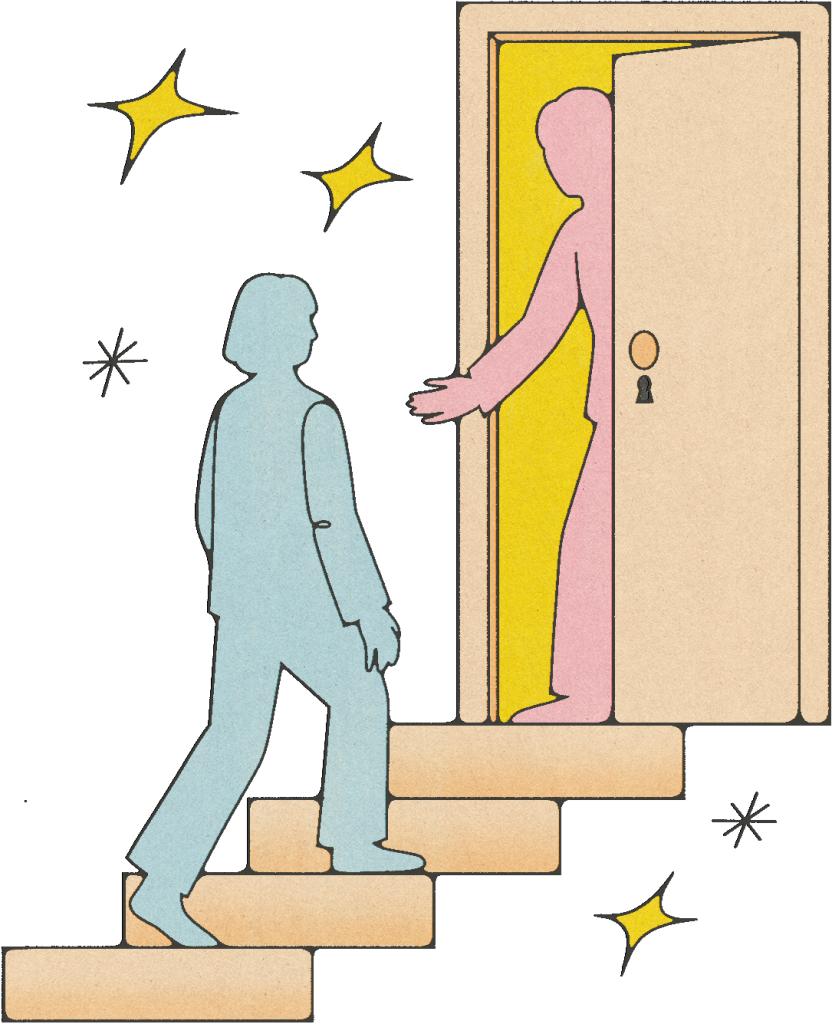
Practical ways to move from gatekeeping to partnership and to make dignity the baseline, not the exception.
Created by people with lived experience
This resource was authored by the Making Rights Real (MRR) Co-Design Group — a collective of 16 people from across Australia with lived experience of psychosocial disability and mental health challenges.
Our group represents a diverse range of identities, including Trans, Non-binary, Queer, Pansexual, First Nations, and Culturally and Racially Marginalised (CARM) communities. We are not just participants in this work; we are the designers and visionaries behind it.
Developed over a 12-month iterative journey, this work reflects the collective wisdom, lived experience, and emerging ideas of mental health consumers across Australia. When you engage with this content, you are engaging with a movement toward systems built on partnership rather than compliance — systems that recognise lived experience as expertise and human rights as the foundation of practice.
From understanding to action
Once the barriers are named, a natural next question follows: what do we begin to build in their place? This is where understanding turns into practice. The Blueprint for Partnership and the Warm Entry are guides our co-designers created with practical shifts stakeholders can start making to dismantle barriers and embed human rights-affirming practice. This isn’t work with a finishing line; change is ongoing, and these are starting points for it.
The shift at the heart of this work
For many consumers, a good life is blocked not by personal failure but by systems built to maintain a set standard rather than uphold human rights. Changing that begins with a single shift: from gatekeeper to foundation builder from someone who controls access and makes decisions for consumers, to someone who builds the supports consumers need to lead their own lives.
A gatekeeper system assumes
Professionals know best
A gatekeeper system assumes
Compliance equals care
A gatekeeper system assumes
Risk must be controlled for people
A gatekeeper system assumes
Support is only needed in crisis
A gatekeeper system assumes
Belonging must be earned
A partnership approach recognises
The consumer is the expert in their own life
A partnership approach recognises
Safety includes the right to make choices
A partnership approach recognises
Connection and continuity matter
A partnership approach recognises
Rights and dignity are everyday practice
A partnership approach recognises
Belonging is assumed, not conditional
The Blueprint for Partnership
The Blueprint is an invitation for stakeholders to step out of the role of expert and into the role of collaborator. It has one core goal — human rights-affirming practice — anchored in three principles.
Affirm legal capacity
From assumed incapacity to supported decision-making. Personal choice and lived experience are the highest authority in the room, whatever a person’s professional, institutional, or financial status.
Build respectful care
From clinical symptom management to relational continuity. Success is measured through genuine connection and proactive wellbeing, funded as core practice rather than occasional intervention.
Promote inclusion and safety
From risk mitigation to universal belonging. Environments value each person’s contribution over institutional image and rigid process.
The Blueprint then translates these principles into a role for everyone who shapes the system:
Service providers: moving from “doing for” to supporting people to do for themselves.
Policymakers: aligning funding and policy with dignity, autonomy, and inclusion.
Families and carers: supporting autonomy while offering connection and a safety net.
Communities: building spaces where belonging is assumed and difference is reflected.
Blueprint for Partnership
A framework for stakeholders to create human rights-affirming practice — including the three principles, the gatekeeper-to-builder shift, and practical roles for service providers, policymakers, families, carers, and communities.
If the Blueprint is about the structures we build, the Warm Entry is about the moment a consumer first reaches out. So often, that first contact is where things go wrong — where assessment, paperwork, and professional distance create what our co-designers called “friction”.
The Warm Entry replaces a processing mindset — where a person is a number to be triaged and a form to be filled — with relational anchoring: a calm, transparent, respectful presence that helps consumers feel safe and seen. It asks services to move from processing to presence, from compliance to collaboration, and from friction to flow.
What the Warm Entry offers
Prepared presence: meeting each person as a human being, not an administrative task — including a brief, intentional pause before contact.
Calm spaces: physical and sensory environments that lower the pressure of entry, rather than signalling hierarchy and distance.
Respect as a measure: accountability defined by whether consumers felt respected, not only by whether the paperwork was complete.
The Warm Entry
The Warm Entry
DOWNLOAD OUR RESOURCE
A human rights-based operational guide for moving from friction to flow — covering prepared presence, soft spaces, respect as a clinical metric, and a shared vocabulary for relational practice.
The Relational Guide turns the Warm Entry into something front-line staff can use today. It is a practical, ready-to-use set of prompts for clinicians, intake workers, and anyone meeting consumers at the point of entry — small, concrete actions that disrupt the processing mindset and begin every interaction human-to-human.
None of this is meant to be static. It is an invitation to reflect on how partnership, rights, and relational practice can become part of everyday work. A few questions to sit with:
What would this look like in my daily work tomorrow?
Where do current systems make it harder for someone to exercise their autonomy?
Am I acting as an expert, or as a collaborator?
Does my support build independence, or deepen dependence?
If the person I support read my notes about them, would they feel respected and accurately represented?
Making Rights Real is more than a policy shift. It is a commitment to reimagining the relationships, systems, and structures around people through the lens of lived experience, human rights, dignity, and belonging. Together, we can move from systems built on compliance toward an ecosystem grounded in partnership, connection, and shared responsibility.